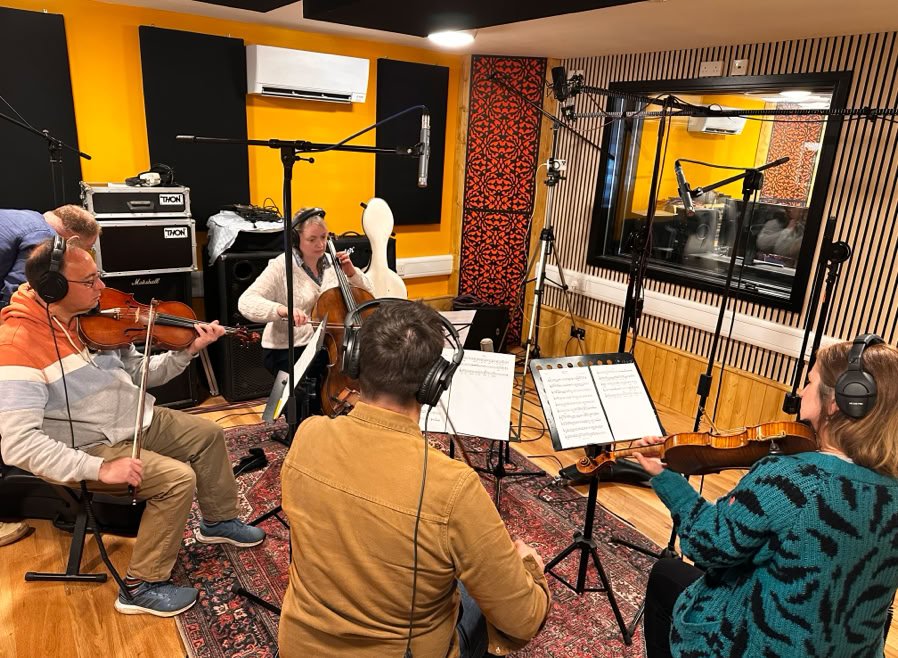
One of the more challenging aspects of a studio recording for an artist or band is to be able to hear themselves clearly during the recording process. It is essential for an individual band member to not only hear their bandmates well enough to perform against but to hear themselves well enough above the backing to be able to discern the notes they are playing and to judge their own performances. In the early days of recording it was the job of the engineer to provide a cue mix to the talent and mix a balance that the artist was happy with. Equipment limitations at the time meant that options for the artist were limited to the extent that there may have been only one or two headphone mixes available to a band to share. A lot of the time talent demands for ‘more ME in the mix please’ could not be met.
Early Solutions To ‘More Me’
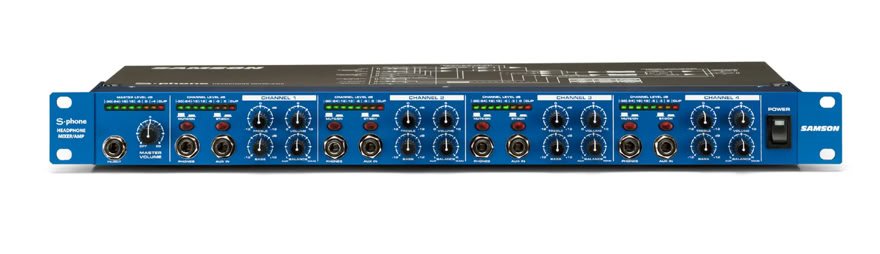
To help the predicament, audio manufacturers started to bring out multi output headphone amplifiers such as the Samson S-Phone headphone distribution with the ability for a ‘more me’ input mix for each channel. But still, especially with smaller scale studio’s, console outputs may only provide a limited number of Aux outputs to be able to send individual mixes, a problem I carried myself for many years in my previous studio.
The Advent Of Personal Monitoring
In the early 2000’s companies such as Aviom and Hear Technologies came up with personal monitoring systems. These comprised of multiple channel personal headphone amplifiers connected to a central unit via a simple Cat5 cable. The central unit was fed by tapping of the studio console I/O normally achieved via a patchbay. Each artist then had control of their own mix entirely. A game changer for sure. The only downside was that the cost of these systems was prohibitive to all but the larger recording studio’s. Companies such as Behringer, typically considered budget pro audio, then took this on and made it more accessible with their power play products. But still, it is quite an outlay for the smaller studio.
Behringer X-Air Series
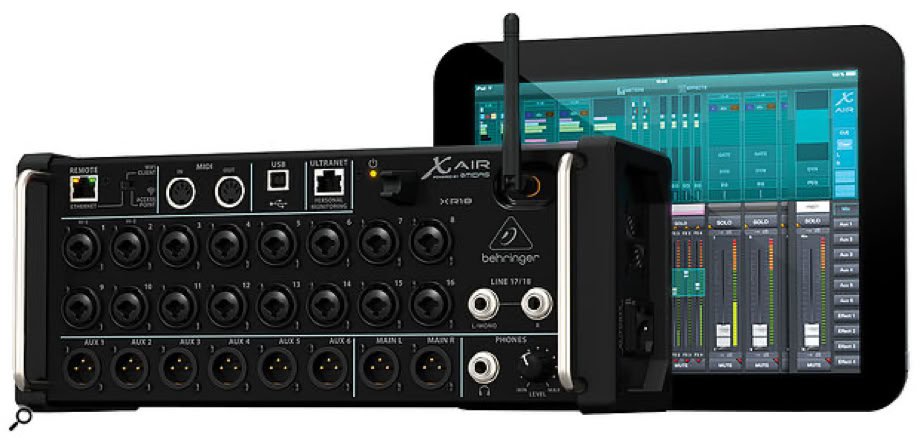
A few years ago now, as a gigging musician, I was looking for a small footprint but powerful mixer with plenty of Auxes for my bands live work. I found the Behringer XR-18 mixer which was perfect. Main outs for PA, 6 Aux outputs, 16 mic inputs, 2 line inputs and onboard digital effects all controlled via an iPad app. Best of all it was a very reasonably priced all in one solution for mixing a live band. A very nice piece of gear that, with the upcoming build of the Oastview Recording Studio gave me a very good idea indeed.
Oastview Studio’s Personal Monitoring
The great thing about the X-Air 18 is that it can be used with multiple iPads and with it’s two main outputs and six Aux outputs total of 8 mono or 4 stereo mixes (or combinations thereof) can be used for individual mixes. And here’s the best bit! There are companies on Ebay offering refurbished early version iPads ridiculously cheap. Therefore, I invested in a second XR-18 solely for studio use fed by my patchbay and purchased 6 Gen2 iPads for £25 each. (I already had two later models). I can now provide 8 individual mixes operated by the talent themselves. I also have one in the control room to adjust anything as required. The whole thing cost me less than £500 and is a game changer.
Hopefully this will lead you to do something similar for your own studio.
Nick Wood
Audio Engineer & Music Producer